


An acoustic solution for educational spaces

Some group rooms are as loud as if someone had started up a noisy lawnmower. Usually, many things happen at once in these rooms: different people talk at the same time. Added to this are the noises and shouts, people moving around, the clattering of cups, the rumbling of a box of building blocks being emptied, or the shrill sound of chairs being pushed back.


In educational rooms with poor acoustics, voices and noises linger for a long time and form a permanent background noise (diffuse sound field). Anyone who wants to be understood tries to drown it out. This creates a spiral of noise that slowly spirals upward (Lombard effect).

Kamak: Help for room acoustics

In order to accurately understand how sound propagates in your rooms, we perform calculations and measurements. Depending on the intended use and floor plan, the materials used, and the furniture and objects present, the sound behavior can vary greatly. We

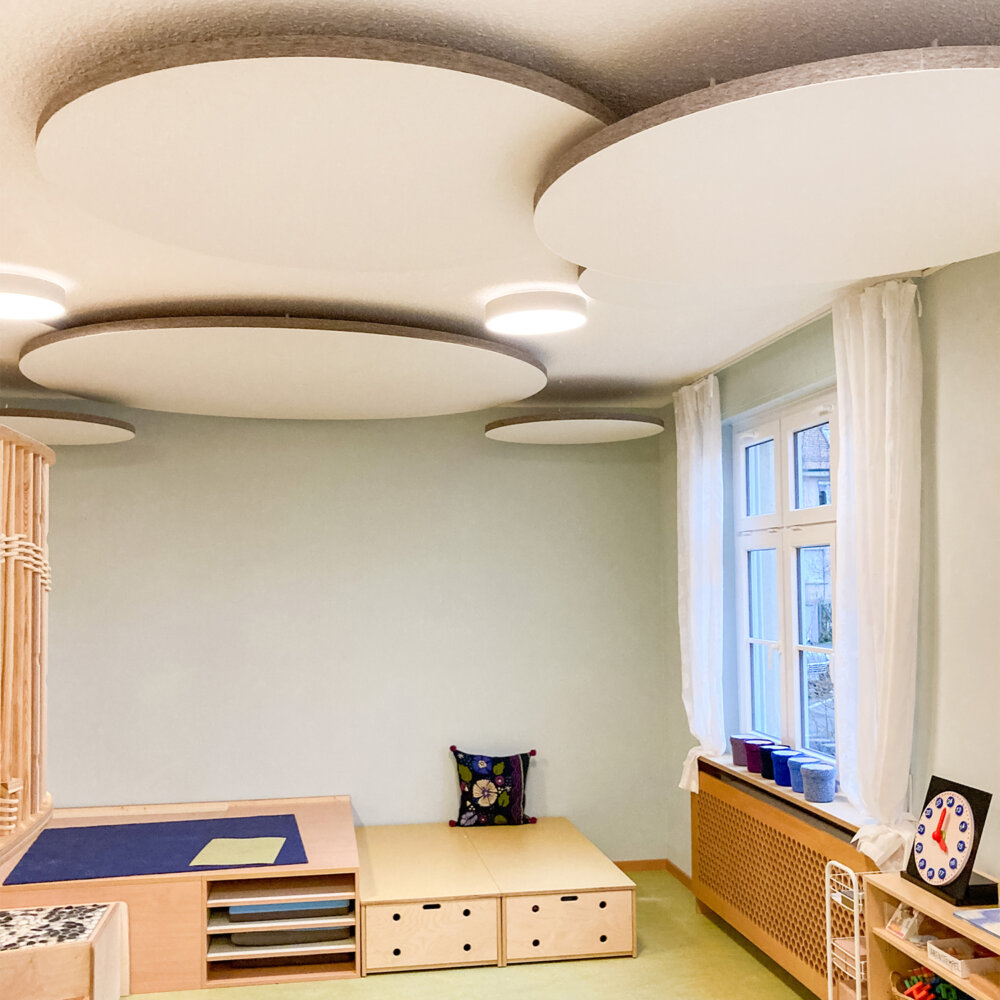
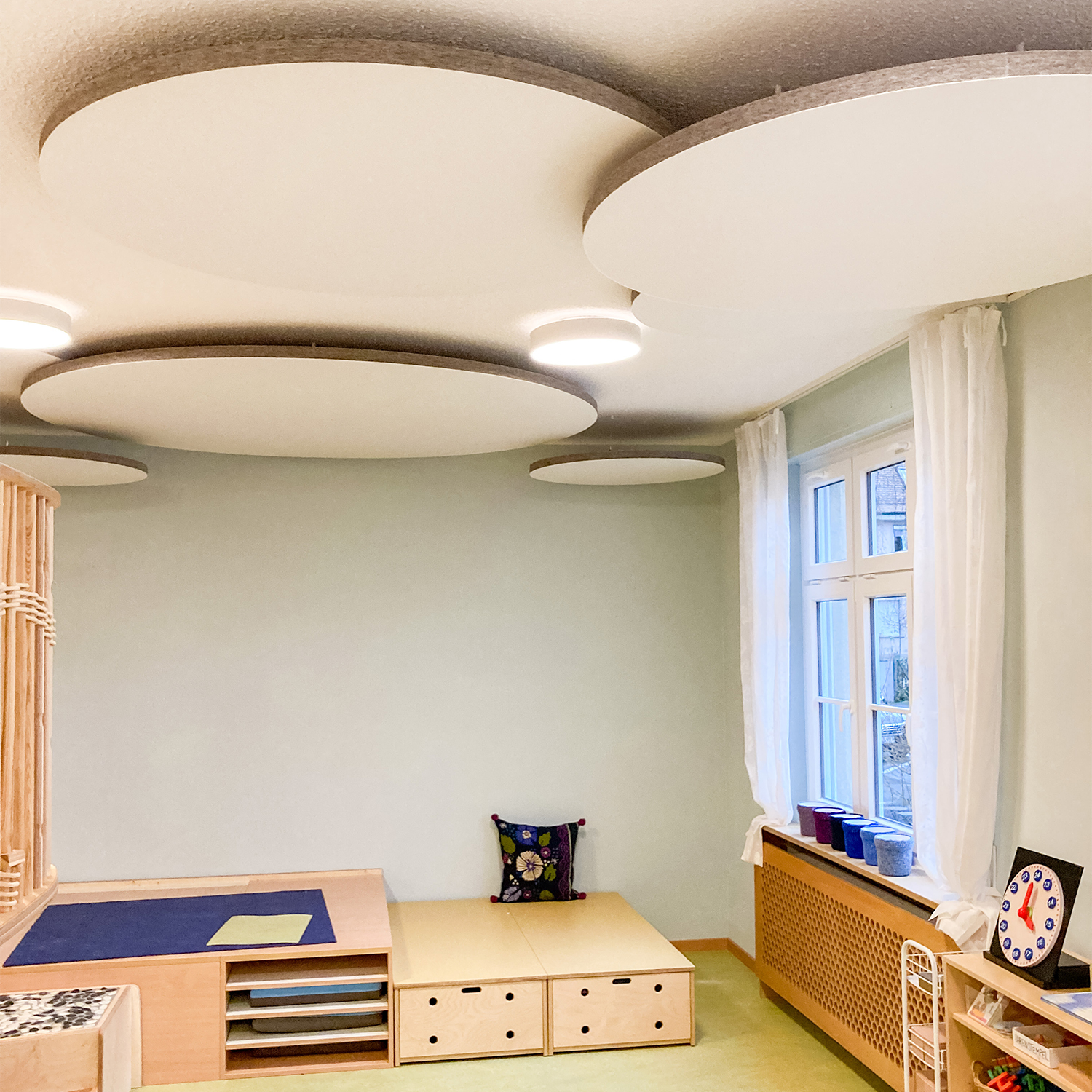
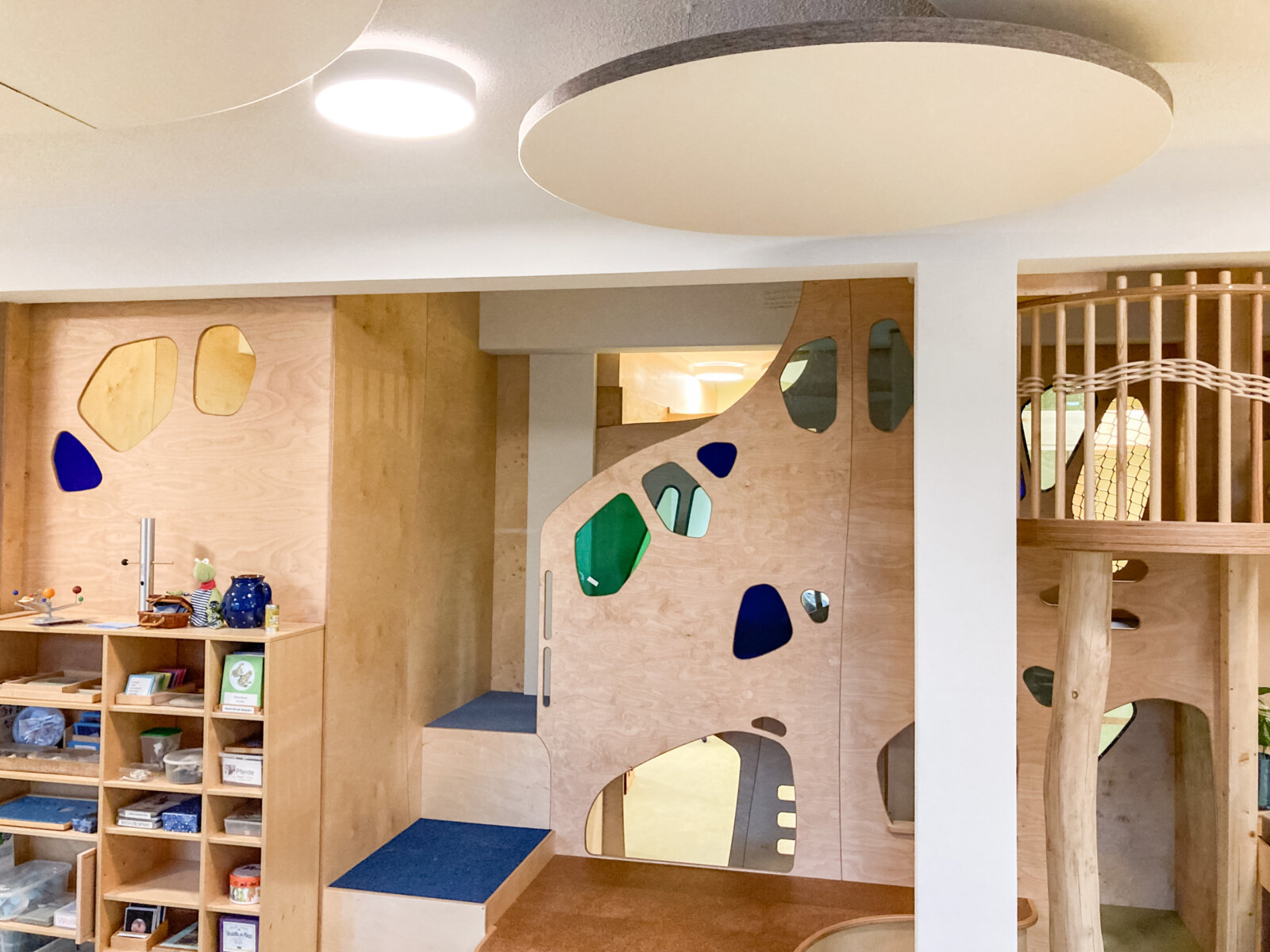
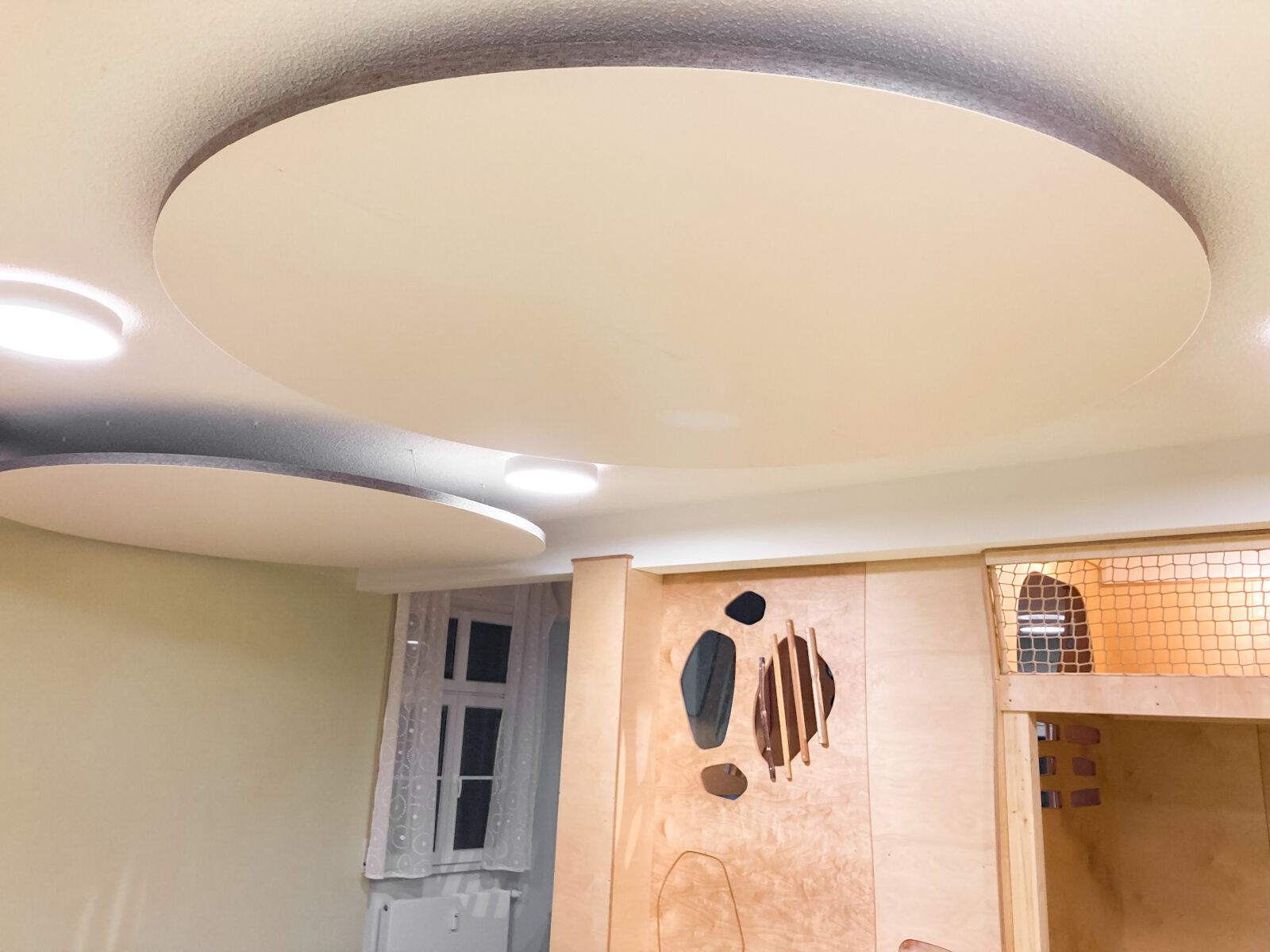
then tailor the measures to your individual needs: In most cases, we use absorbers that are attached to the ceiling and walls or placed as objects in the room to absorb sound. We also give you tips on how to design your rooms with noise in mind.

  • Knowledge: Reverberation time

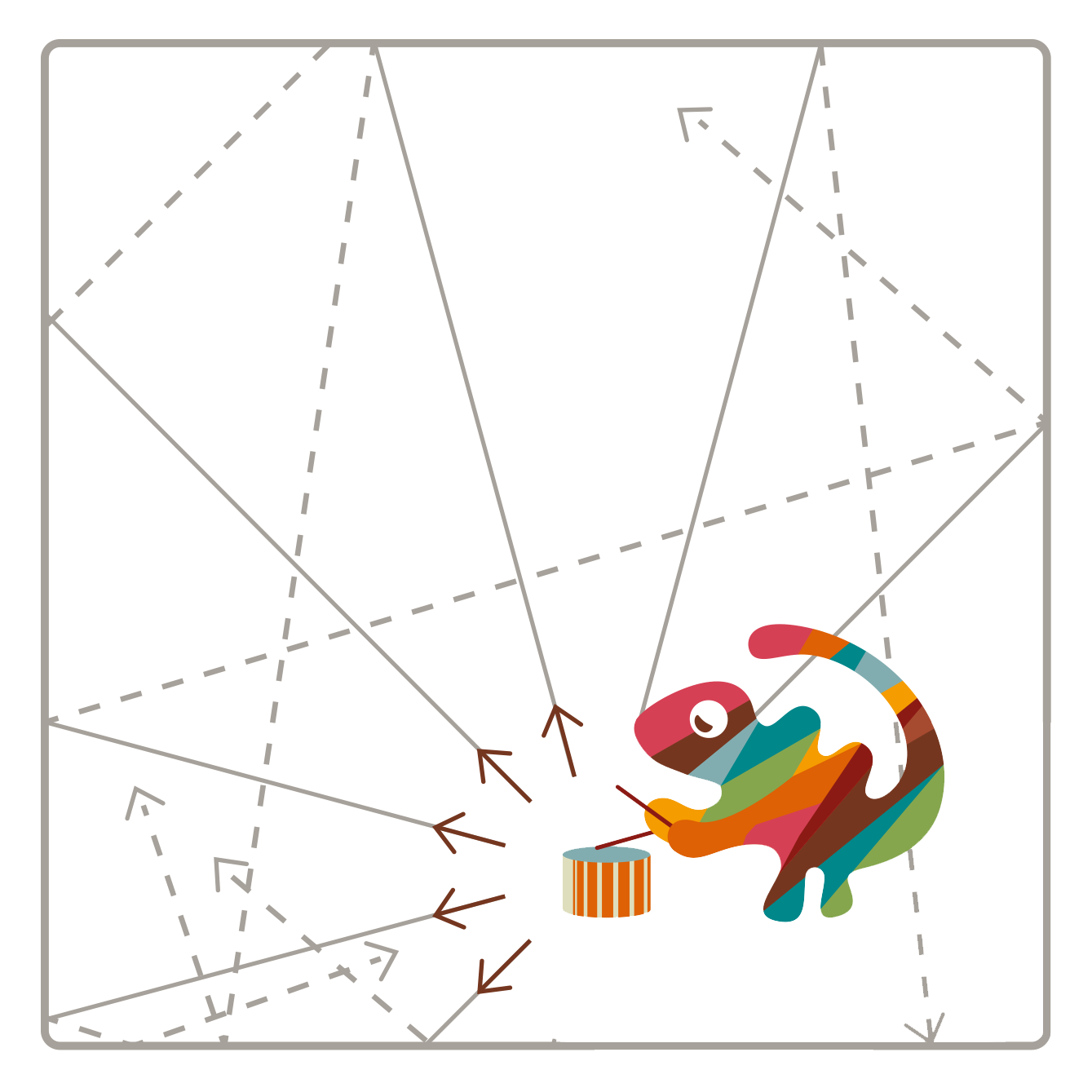
    Reverberation occurs because smooth surfaces, ceilings, floors, walls, windows, and furniture fronts reflect sound and send it back and forth through the room like a game of ping-pong.

    In noisy daycare rooms, our measurements show that the average reverberation time is 2.3 seconds. The relevant standard for a good listening experience in rooms (DIN 18041) specifies a maximum reverberation time of 0.6 to 0.7 seconds on average for daycare centers and group rooms in schools. If children with hearing impairments, those with special speech development needs, or those with increased sensitivity are also to find optimal conditions, the average reverberation time must not exceed 0.4 seconds. This means that the acoustic requirements increase by 20 percent.
  • Background: Noise is a health risk

    Our body releases the hormone adrenaline and goes into a tense fight-or-flight mode because it interprets the noises as potentially threatening.

    People therefore behave more aggressively in noisy rooms. They often suffer from headaches or earaches and, in the worst case, suffer irreparable damage to their hearing. Children's ears are even more sensitive and susceptible to this than adults'.

    General information

    Fields marked with * are mandatory fields and must be filled in.

    Room details

    Measurement tolerances of up to 0.5 m are not relevant for acoustic calculations

    Room details

    Measure window reveal, or window
    including window frame, height*width*number of windows
    Proportional selection in m2 / parquet, laminate, linoleum, tiles, solid wood, carpet, etc. / e.g. floor space 100%, of which approx. 80% is linoleum and 20% is carpet
    In order to properly assess the room, we need some photos of your room in advance (of the ceiling, walls, windows, corners, room fixtures such as cable ducts, curtain rails, columns, lamps, flooring, etc.)
    For example, a door or wall opening is permanently open to an adjoining room
    Our calculations are based on DIN 18041 (March 2016) for the respective intended use, taking into account the measurement and calculation data, especially in the area of nurseries/daycare centers/kindergartens/schools, for rooms with inclusion.